Monday, July 2, 2012

Japan Girls: Poised for Cinderella surprise

'In the Spotlight' is a series that will profile each of the 24 participating teams at the London Olympic Games. It will provide a glimpse of what to expect as each squad begins its London quest. Between now and the Olympic opening ceremony a new team will be featured every 2-3 days. Today, we feature the Japanese women's national team.

The Basics:
The Japanese women weigh in at ninth in the FIH World Ranking, and are the third-highest ranked team from Asia, behind China and Korea. At the Games, they will play in Group B where they will meet both their Asian rivals in addition to the Netherlands, Great Britain and Belgium. Japan has a modest Olympic history, playing in only the two last games where they finished 10th in Beijing and eighth in Athens. But since their last Olympic appearance, the Japanese women have had two of their strongest showings on the international stage. The first was winning the Champions Challenge 1 in June 2011 in Dublin earning the right to move up to the Champions Trophy where their second success was a strong fifth-place finish. As a fun fact, Japan recently jumped on the nickname train, and are called ‘Sakura’ which means Cherry Blossom.

The Road to London:
Japan convincingly won the third and final women’s qualification tournament on home soil in Kakamigahara with a 5-1 victory in the final game against Azerbaijan. The Japanese women were under intense pressure and media scrutiny during the event and weathered the storm with grace. The only blip on the radar during the six-games was a 0-0 draw against Chile.
Players to Watch:
At 41 years of age, Akemi Kato will be not only the oldest player in the women’s hockey tournament, but also among the oldest athletes at the Games. But don’t be fooled, Kato is able to keep up with Japan’s speedy squad while brining the experience of nearly 400 caps to the table. Kaori Fujio and Rika Komazawa provide a nice one-two punch on offense. Fujio has exception scoring skills from the field, while Komazawa is strong on the penalty corner. Fujio, Komazawa, Kato and Sachimi Iwao have played for Japan in all three of their Olympic appearances.

Coach:
Zenjiro Yasuda has guided the Japanese through their last few successful years. With each passing event, the team is stronger as evidenced through their rise in both the standings and the FIH event schedule. The veteran coach always speaks humbly of his squad before matches and puts little stock in pre-game standings or hype.
Strengths:
Japan has amazing speed and a high fitness level that allows them to push their opponents to brink. Their discipline and reserve both on and off the field is impressive to behold, meaning they are likely one of the teams least likely to be affected by the massive media hype around the games. The team has even been known to bow to its opponent after each match, regardless of the outcome. Japan has also a solid three or four players that can be counted on to score, making it tough to cover them on defense.

Weaknesses:
When the Japanese women’s team is on, they are precise, quick, and nearly unstoppable – the teams at the last FIH Champions Trophy in Argentina learned this lesson the hard way. But when Japan is off, they simply don’t function, as evidenced by the scoreless tie against Chile at the qualifier. Japan has to make sure its offense is in top form and avoid a rollercoaster performance – it’s one thing to pull out of a funk at a qualification tournament, but entirely another to perk up in the middle of the Olympics.
Crystal Ball:
The Japanese women’s program is on an upswing, but is likely a good Olympic cycle away from threatening to take a place on the podium. That being said, the Japanese are poised to pull off at least one major upset and should thrive in the Asian-heavy Pool A, giving them their best possible chance to go for a Cinderella surprise appearance in the semi-finals.

Dutch leave out Taekema..


THE Dutch men’s team announcement for the Olympics was one of the most highly-anticipated with many questions looming over the fate of its star players. And today’s final decision did not disappoint in terms of drama with big name stars Taeke Taekema and Jeroen Hertzberger left off the roster.

Taekema has played 239 games for the Dutch, while Hertzberger has been on the squad for every major international event since 2007. Just last week Hertzberger said in an interview that he expected to be named to the Olympic squad. Taekema's fate was a little less certain after he was left off the team ealier in the year for a handful of test series.
Also not making the cut were Quirijn Caspers and Seve van Ass, son of head coach Paul van Ass. But it was good news for veteran standout Teun de Nooijer, who made his debut back on the team in last week’s test match against Great Britain after almost eight weeks of being sidelined with injuries. He made the cut and will join the Dutch team in London.
For de Nooijer and the other 15 players making the cut, it is time to focus on the Games that lie ahead and try not to focus on the team omissions, but rather the squad’s potential less than a month from today.
Dutch 2012 Olympic TeamSander Baart (OZ), Billy Bakker (Amsterdam), Marcel Balkestein (OZ), Floris Evers (Amsterdam), Rogier Hofman (Bloemendaal), Robert van der Horst (Rotterdam), Wouter Jolie (Bloemendaal), Robbert Kemperman (Rot-Weis Köln), Teun de Nooijer (Bloemendaal), Jaap Stockmann [GK] (Bloemendaal), Valentin Verga (Amsterdam), Klaas Vermeulen (Amsterdam), Bob de Voogd (OZ), Mink van der Weerden (OZ), Roderick Weusthof (Rotterdam), Sander de Wijn (Kampong).

Reserves: Tim Jenniskens (NED), Pirmin Blaak [GK] (Rotterdam).

Sunday, July 1, 2012

Hitler's Olympic Village of 1936

It was home to Jesse Owens when he faced the Nazis at Berlin 1936, before it became a torture base for the KGB

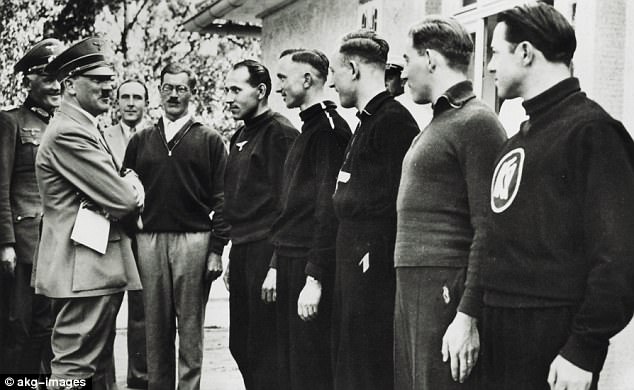
Athletes from all over the world headed 76 years ago to take part in the most infamous Olympic Games in history - the so-called 'Nazi Games' (pictured Adolf Hitler greeting them)

A bas-relief of marching Nazi troops, a Red Army mural – and a cellar where the anguished cries of condemned torture victims once rang out in the night.
If walls could speak, those within the Olympic Village of 1936 would have a host of dark tales to tell.
This is where athletes from all over the world headed 76 years ago to take part in the most infamous Olympic Games in history – the so-called ‘Nazi Games’.
The 1936 Olympic Village, on the western edge of Berlin, lies forlorn and forgotten.
‘It is a shame,’ says Sven Voege, who’s currently in negotiations to rent out some of the village sites as exhibition rooms.
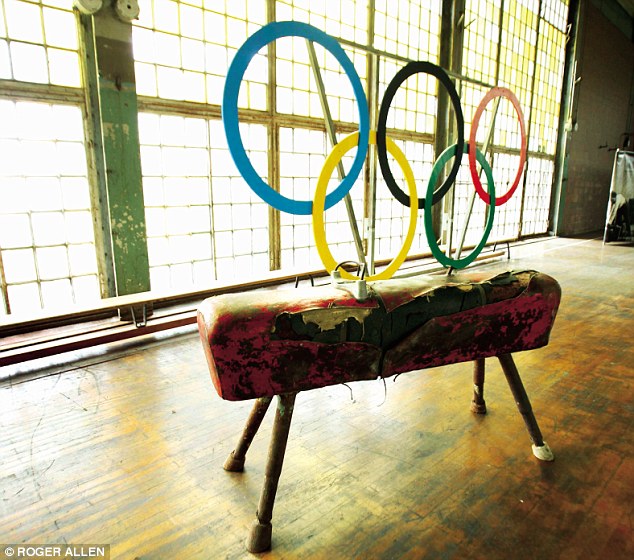
The gym, with the Olympic rings and a vaulting horse used by German triple gold medallist Alfred Schwarzmann
The gym, with the Olympic rings and a vaulting horse used by German triple gold medallist Alfred Schwarzmann. Located on the western edge of Berlin, it lies forlorn and forgotten

‘But because it is inextricably bound up with Nazism, most Germans avoid it. It is a place that lives and breathes sportsmanship and history, side by side.
'But German history is something we shun because of our past.’
Around 4,000 athletes – including Great Britain’s 208-strong squad – took part in the Games in the summer of 1936.
Adolf Hitler looked on with delight as his German ‘supermen’ lived up to his dreams of glory, winning the Games with a medal count of nearly 90; Great Britain came tenth with just 14.
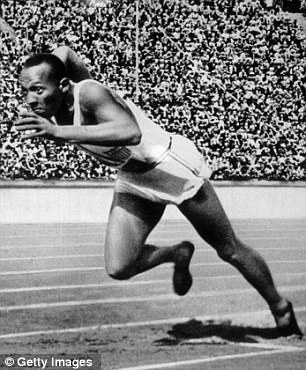
The only real slap in the face for the Führer was the success of America’s black track-and-field athlete Jesse Owens.
He won four gold medals and was the star of the Games in the world’s eyes – even if Hitler regarded him as inferior because of his colour.
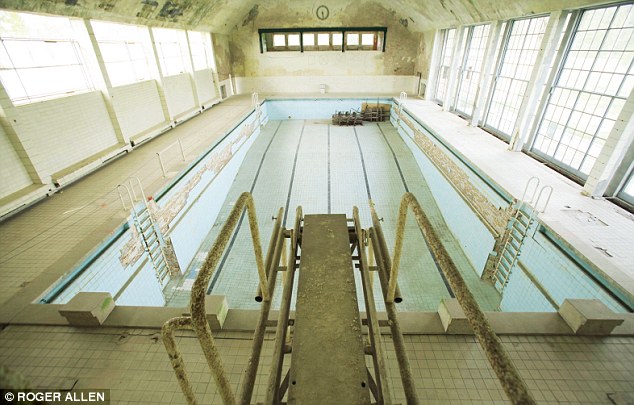
The swimming pool, viewed from the diving board
The swimming pool, viewed from the diving board. Hopes of refurbishing the building, which served in WWII as a hospital for wounded German troops, have fallen through

Ironically, Owens’s tiny room – No 5, in block 39 – is the only athlete’s room that has been renovated.
It’s a simple space that reflects the modesty of the humble man who stayed there – a man who, paradoxically, enjoyed more freedom in Nazi Germany at that time that he did in his segregated U.S. homeland.
A short walk from Owens’s quarters lies the ‘Restaurant of the Nations’, the eating hall for the athletes.
The record books tell how in three weeks the participants consumed 100 cows, 91 pigs, over 650 lambs, 8,000lb of coffee, 150,000lb of vegetables and 160,000 pints of milk.
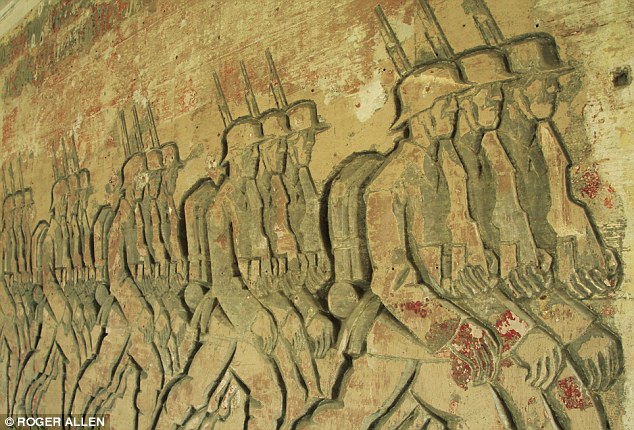
A bas-relief of marching German soldiers, which still stands near the theatre where athletes went to watch variety shows, hinted at Hitler's future military ambitions

‘The Führer was teetotal and the order for the athletes was no drinking,’ says Voege.
‘But the French and the Italians railed against the idea of no wine, while the Belgians and Dutch thought the prospect of no beer was too much to contemplate.
'All four nations were the exception and were served alcohol at every meal.’
Only the salon where the Italians dined alongside the Soviets is preserved. The room where the British ate is a shell filled with fallen masonry.
Hopes of refurbishing the building, which served in WWII as a hospital for wounded German troops, have fallen through.
In 1936 a huge steel-and-wood sign depicting the five Olympic rings stood on top of the Restaurant of the Nations.
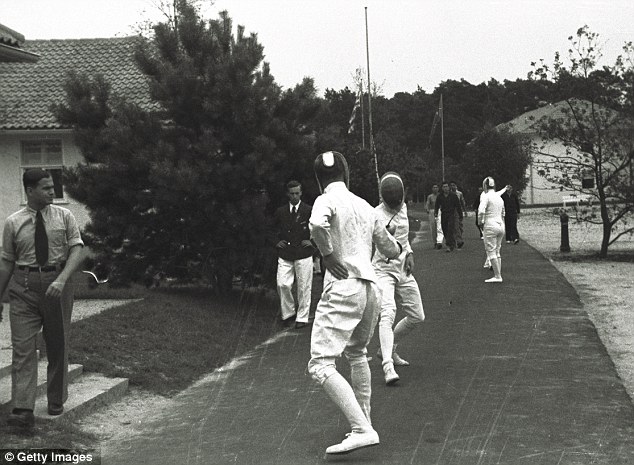
The fencers practise in the Olympic Village
The fencers practise in the Olympic Village. During their stay, there were constant reminders of the Nazi regime's less savoury side. Athletes were surrounded by officials in Nazi uniforms

That’s now propped up against a back wall, forgotten, in the off-limits gymnasium.
Outside the hall is the 400m loop, which is just as it was when Godfrey Brown, Godfrey Rampling, Freddie Wolff and Bill Roberts pounded it in practice before going on to win gold for the UK in the 4x400m relay race.
‘Children were allowed into the village, and the English runners were firm favourites with them because of their impeccable manners,’ says Voege.
Jesse Owens won four gold medals and was the star of the Games in the world's eye

‘They always stopped to say hello to the children and sign autographs.’
During their stay, there were constant reminders of the Nazi regime’s less savoury side.
Athletes were surrounded by officials in Nazi uniforms.
And a bas-relief of marching German soldiers, which still stands near the theatre where athletes went to watch variety shows, hinted at Hitler’s future military ambitions.
After the war ended in 1945, the Olympic Village was occupied for nearly 50 years by the Soviet Army.

Among the new tenants were the torturers of SMERSH and the KGB, interrogators who turned the subterranean rooms housing the swimming pool’s heating system into a theatre of pain and death.
The cremated remains of victims lie strewn over the site.
Meanwhile, mocking Hitler’s dreams of a ‘thousand-year Reich’, a painting was added of heroic Red Army soldiers doing battle with the Nazis in the ‘Great Patriotic War’, which claimed the lives of over 25 million Soviets.
Since the fall of communism, the Olympic Village has lain largely undisturbed, any hopes of restoring it scuppered by its Nazi past.
Hopefully a far happier future awaits the site of the London 2012 Olympics after the athletes have returned home.

In The Spotlight.. Netherlands women

In the Spotlight' is a series that will profile each of the 24 participating teams at the London Olympic Games. It will provide a glimpse of what to expect as each squad begins its London quest. Between now and the Olympic opening ceremony a new team will be featured every 2-3 days. Today, we feature the Dutch women's national team.
 
The Basics:
The Netherlands Women are currently ranked 1st in the FIH World Ranking with 2063 points, just 33 points ahead of nearest rivals Argentina. The Dutch have played in the last seven Olympic Games, only missing the 1980 Games due to the boycott in Moscow. From those seven events, two gold, one silver and three bronze medals have accrued with 1992’s sixth place their worst performance, and they go to London as reigning champions. In 2010, they were World Cup runners-up to Argentina in Rosario but won the 2011 Champions Trophy on home soil and the EuroHockey Championship in Mönchengladbach. February saw their recent run stalled with bronze in Rosario’s 2012 Champions Trophy.

The Road to London:
As European Champions, the Netherlands claimed one of the two automatic slots from the continental competition to London along with final runners-up, Germany.
Players to Watch:
At just 27, Dutch skipper Maartje Paumen’s is already among one of the legends of the game. A powerful presence in the centre of the back or pushing on into midfield, she has the ability to spray passes to the flanks, and the reach to pick off big tackles. It is her corner ability, though, which she is most famed for as one of the most fearsome – along with South Africa’s Pietee Coetzee – penalty corner exponents. She was named the 2011 FIH Player of the Year, is the top scorer in Champions Trophy history and scored in every single game of the Netherlands’ 2010 World Cup campaign. Naomi van As adds a graceful figure to midfield while Lidewij Welten is a key threat from play in and around opposition goalkeeper’s pads.

Coach:
Max Caldas, a former Argentine international but long-time Dutch resident, took over the head coach’s role in November 2010 having been the assistant coach in 2006 when the Netherlands won the World Cup and the Beijing Olympics. Since taking on the role, the Dutch have won the European Championship and the 2011 Champions Trophy on home soil before coming third in Rosario earlier this year. Caldas started his coaching career in earnest after injury put paid to his playing days, the highlight of which included a Pan-American gold and Champions Trophy bronze. He had been in Holland for four seasons with Klein Zwitserland and stayed in the country to pursue coaching, attaining success with Leiden and Amsterdam’s ladies first team before taking on the Bloemendaal men’s team.
Strengths:
Defensively, the spine of the team, with Willemijn Bos and Maartje Paumen central, is an immaculate one as they managed to win the European title conceding just twice in five games. In doing so, they kept the world number three and four sides Germany and England blank in the knockout phases. Their penalty corners are one of the most lethal in the women’s game while their ability to create space down either flank creates plenty of chances.

Weaknesses:
Since the 2010 World Cup, enforcers like Janneke Schopman and Minke Smeets have retired, leaving a big amount of leadership responsibility to fill for their fresh-faced panel. Argentina are their recent Achilles heel, ending their title hopes at the last two major events as the trickery of Luciana Aymar and Carla Rebecchi has been their undoing - something they will need to pin down should the sides meet. Caldas pin-pointed Great Britain as favourites for gold in the wake of the Investec London Cup and so they need to be extra wary of the hosts in the group phase.
Crystal Ball:
The to and fro between the Netherlands and Argentina in recent times leaves them as the two fancied sides for overall glory. For Max Caldas’ side, the group phase looks the friendlier of the two, though Great Britain on home turf will be a more than tricky final pool game should any points be dropped en route. Their corner prowess and mean defence should see them have the tools to progress to the latter phases.

Friday, June 29, 2012

In the Spotlight.... Korea Men

In the Spotlight' is a series that will profile each of the 24 participating teams at the London Olympic Games. It will provide a glimpse of what to expect as each squad begins its London quest. Between now and the Olympic opening ceremony a new team will be featured every 2-3 days. Today we take a closer look at the Korean men's national team.

The Basics:
Currently world number six, Korea’s men come into the tournament on 1490 points, just below Spain and ahead of New Zealand in the latest FIH World Ranking list. Their best showing in the competition came back in Sydney in 2000 when they took silver, only denied the top prize by the Netherlands on penalty strokes. They first played in the Olympics when hosting in Seoul in 1988 and have played in four more Games since then. In recent times, Korea finished sixth at the 2010 World Cup and were eighth and last in the 2011 Champion’s Trophy.

The Road to London:

Korea became the last side from the world’s top ten to claim their place at the Games, doing so in dramatic fashion. They edged out Ireland with a Nam Yong Lee goal – awarded on a video referral after initially being ruled out – inside the last ten seconds of their OQT final in Dublin. It secured a 3-2 victory. They had been thrown into the qualifiers by virtue of a fourth place finish at the 2010 Asian Games in Guangzhou.

Players to Watch:

Collective is king for Korea but there is a robust aggression and power in the forward manoeuvres of Lee Nam Yong who regularly takes on the point at the top of their front-line. Nam Hyun Woo has a graceful air, overlapping from either right or left back while the panel is packed with a wealth of experience with the volume of current players with over a century of caps numbering in double figures. Among them, You Hyo Sik has already led the line in two World Cups and two Olympics as a goal-hungry forward, following his father’s footsteps into the national team. Ho Seo Jong is another top-drawer performer, named on the FIH All Star team in 2007, 2008, 2009 and 2010.

Coach:

Shin Seok Kyo took over after the sixth-place finish at the 2008 Olympics from Cho Sung Jun. His tenure started well, gaining bronze in the 2009 Champions Trophy with victory over the Netherlands – Korea’s best result in nine years. A sixth place World Cup finish in 2010 was a par-showing but the past two years have seen the side keep up the pace and coach Shin has a big job to arrest a run of form which dropped Korea to fourth in Asia and last in the Champions Trophy last December. His tactical nous, though, was in evidence in the Olympic qualifier as his more aggressive setup helped turn the tide against Ireland, dominating the closing phases to ultimately secure their ticket to London.

Strengths:
Very much a team that works as a unit, their ability to apply a couple of different, effective presses was key to their progression to the Games as they squeezed the life out of Ireland in their ultimate qualifier in March. A high work-rate is a given for the Asian side and allows them to put in long stints of high presses to affect turnovers in advanced positions while their speed on the counter matches the method well. Goalkeeper Lee Myung Ho marshals a tight-knit defence packed with guts and likely never to shirk a full-blooded, diving tackle.

Weaknesses:

Blessed with pace up front, they look to be slightly shy on creativity and firepower in the final quarter, relying on corners and a rudimentary, crash ball style from play to eke out the vital scores. Cards for stick tackles can be an Achilles Heel, too.
 
Crystal Ball:
Reaching the heights of 2000 looks likely to be beyond the current vintage as their fifth place finish at the 2012 Sultan Azlan Shah Cup in June and eighth at the Champions Trophy last December seem to portray. Nonetheless, they are capable of big results in one-off ties with their wealth of experience of the big stages. They could prove a bogey side throughout the group stages but whether they have enough nous to reach the medal positions looks a bridge too far.